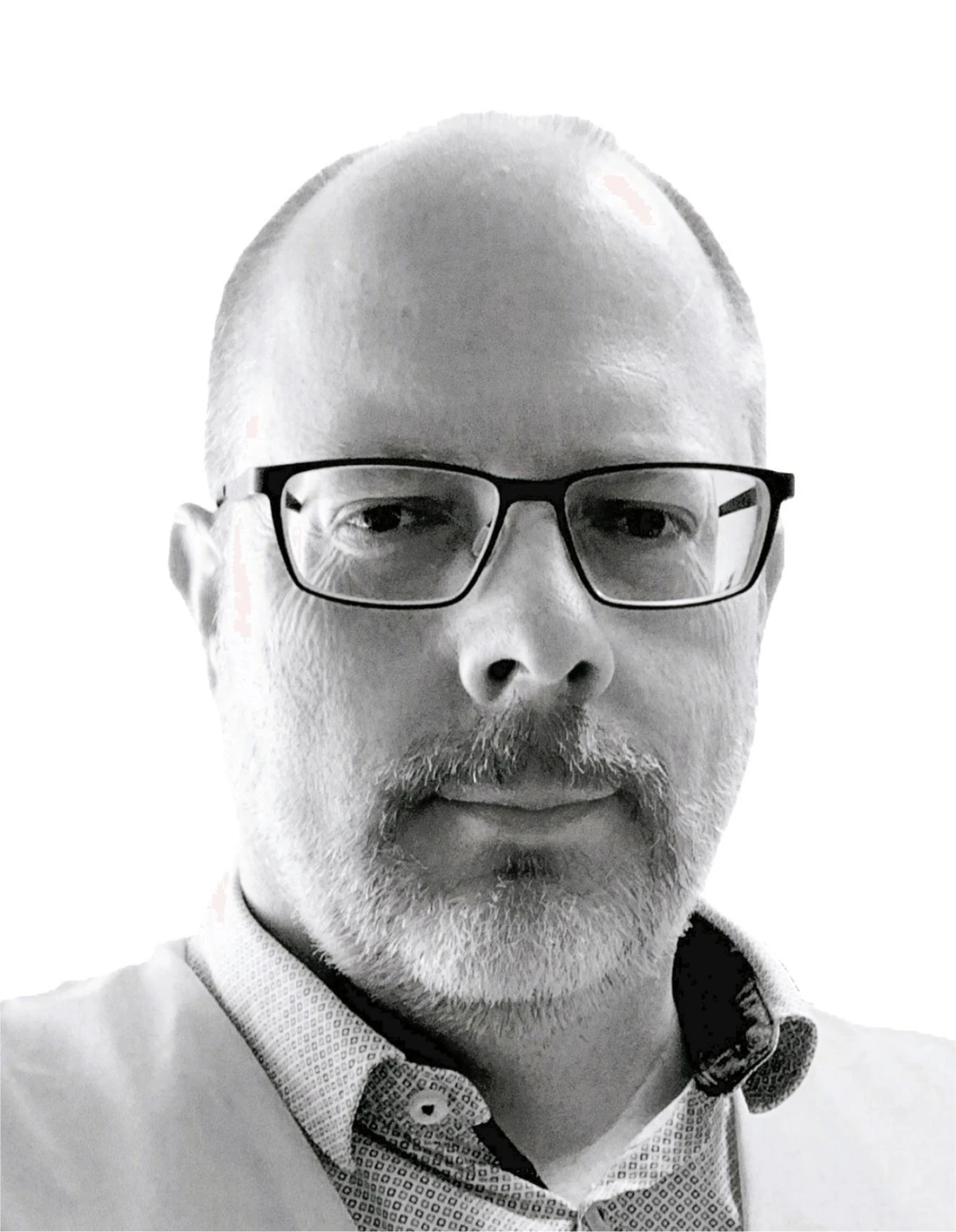
Portrait von Andre Staempfli

Andre Staempfli

MSc Mechanical Engineering, ETH Zurich | MAS ETH MTEC/BWI | CAS AMP HSG St. Gallen

"Good governance does not decide under time pressure – but before capital commitment."

LinkedIn Profile

Executive Summary

This page is intended for board chairpersons and owners of technology- and automation-driven industrial companies with multiple production sites, high capital intensity, and long-term investment cycles, where decisions regarding footprint, platforms, and automation lock in operational risks for years to come. It is not intended for boards that expect detailed operational oversight or who confuse board governance with consulting.

  • Andre Staempfli empowers boards of directors: when safety, risk, or investment decisions embed operational risks in the structure and require independent, disciplined oversight
  • His contributions to the board of directors: explicit risk tolerances; transparent trade-offs; decision-making discipline before capital commitment. The result: faster decision-making, clearer responsibilities, and fewer irreversibly committed risks — while maintaining the same level of entrepreneurial ambition
  • Typical triggers:
    • CAPEX or footprint decisions: when investments permanently lock in safety, resilience, or dependency risks, and achieving operational goals must be weighed against structural risks
    • Borderline cases: in the area of safety without an incident: situations where, although there is no formal escalation, indicators point to increased risks and governance guidelines must be established at an early stage
    • Conflicting objectives between EBIT, delivery capability, and safety: when short-term profit targets implicitly create long-term risks and trade-offs must be explicitly decided
    • Transformation while maintaining business operations: when strategic initiatives simultaneously challenge operational stability, safety culture, and financial discipline
  • Industry fit: industrial manufacturing companies (150–2,500 employees) with explicit governance requirements
  • Selective engagement: open to an initial, confidential discussion with board chairpersons or retained search firms

Governance Profile

André Stämpfli is a Managing Director of the Swiss subsidiary and Operations Director for Central Europe at NYSE:JELD, operating in capital‑ and safety‑intensive manufacturing environments. He holds overall responsibility for more than 1,000 employees across six production sites in Central Europe.

Throughout his career, Andre Staempfli has repeatedly been entrusted with the stabilization, restructuring, and organizational development of complex organizations in Europe and Asia — with the clear goal of creating sustainable, long-term value for all stakeholders.

In addition to his operational responsibilities, Andre Staempfli has served on boards of directors. His perspective on governance stems directly from his many years of overall operational responsibility for complex industrial organizations. This experience enables him to identify at an early stage where strategic, investment, or safety-related decisions can embed operational risks structurally over the long term - long before they become apparent or take effect in day-to-day business.

On the Board of Directors, Andre Staempfli contributes through independent oversight and a consistently constructive yet critical approach. His contribution lies in particular in refining the basis for decision-making, making risks and trade-offs explicit, and clearly assigning responsibility. As an active executive, he does not view the Board of Directors as an extension of the operational arm, but rather as an independent supervisory and decision-making body. Accordingly, he deliberately refrains from intervening in day-to-day business and maintains a distance — even in areas where he is very familiar with operational details due to his own experience. In his view, operational excellence is the responsibility of management; structural risks, investments, and safety-related issues fall under the decision-making authority of the Board of Directors. For Andre Staempfli, this clear separation of roles is a central prerequisite for trust, high-quality decision-making, and sustainable governance. It protects both the Board of Directors and the Executive Board and forms the foundation for resilient relationships, constructive collaboration, and the early, joint clarification of factual issues—before factual issues become relationship issues. Good governance does not rule out risk, but rather determines which risks are consciously accepted. It enhances the quality of decisions prior to capital commitment and remains valid even under time pressure, in the face of conflicting objectives, or amid heightened uncertainty.

Board experience

  • 2016–2018: CONICA HOLDINGS LIMITED, UK – Director of the Board; Restructuring in the context of succession planning and integration into a Swiss parent company

A board membership in a Swiss public limited company is accepted selectively and, for the time being, deliberately limited to a maximum of one position in order to ensure sufficient availability, thorough preparation, and reliable participation alongside an active executive role. After more than 15 years of operational leadership in safety- and capital-intensive environments, the timing has been deliberately chosen to contribute this experience at the board level. Less suitable are positions involving advisory roles without formal governance responsibilities or board roles with a primary focus on marketing, branding, or financial services topics. An initial exchange serves to jointly clarify whether the context, expectations, and readiness for decision-making align.

Strengths

  • Risk Oversight and Health & Safety Governance (including Compliance)
  • Oversight of strategy development and implementation
  • EBIT‑, Cashflow‑ and CAPEX‑discipline
  • Managing Transformations in Large, Complex Organizations (Turnaround & Growth)

His work is grounded in a solid academic background from ETH Zurich (Dipl. Masch.-Ing. ETH, MAS ETH MTEC/BWI) and the University of St. Gallen (CAS AMP HSG), and combines engineering rigor with in-depth business expertise and a clear understanding of governance (VR CAS Swiss Board School, completion H2/2026).

Board Evergreens: recurring board decision-making frameworks

Systemic risks call for multi-site governance

Governance in Industrial Multi-Site Organizations: Why risks do not arise in isolation at individual sites, and what responsibilities the board of directors has at the system level.

Evergreen Q3 2025

Board responsibility: Identify systemic risks explicitly before location-specific decisions cement long-term dependencies. The Board of Directors defines the regulatory framework within which risks are consciously managed at the system level — rather than arising locally, implicitly, and cumulatively.

Safety is non-negotiable

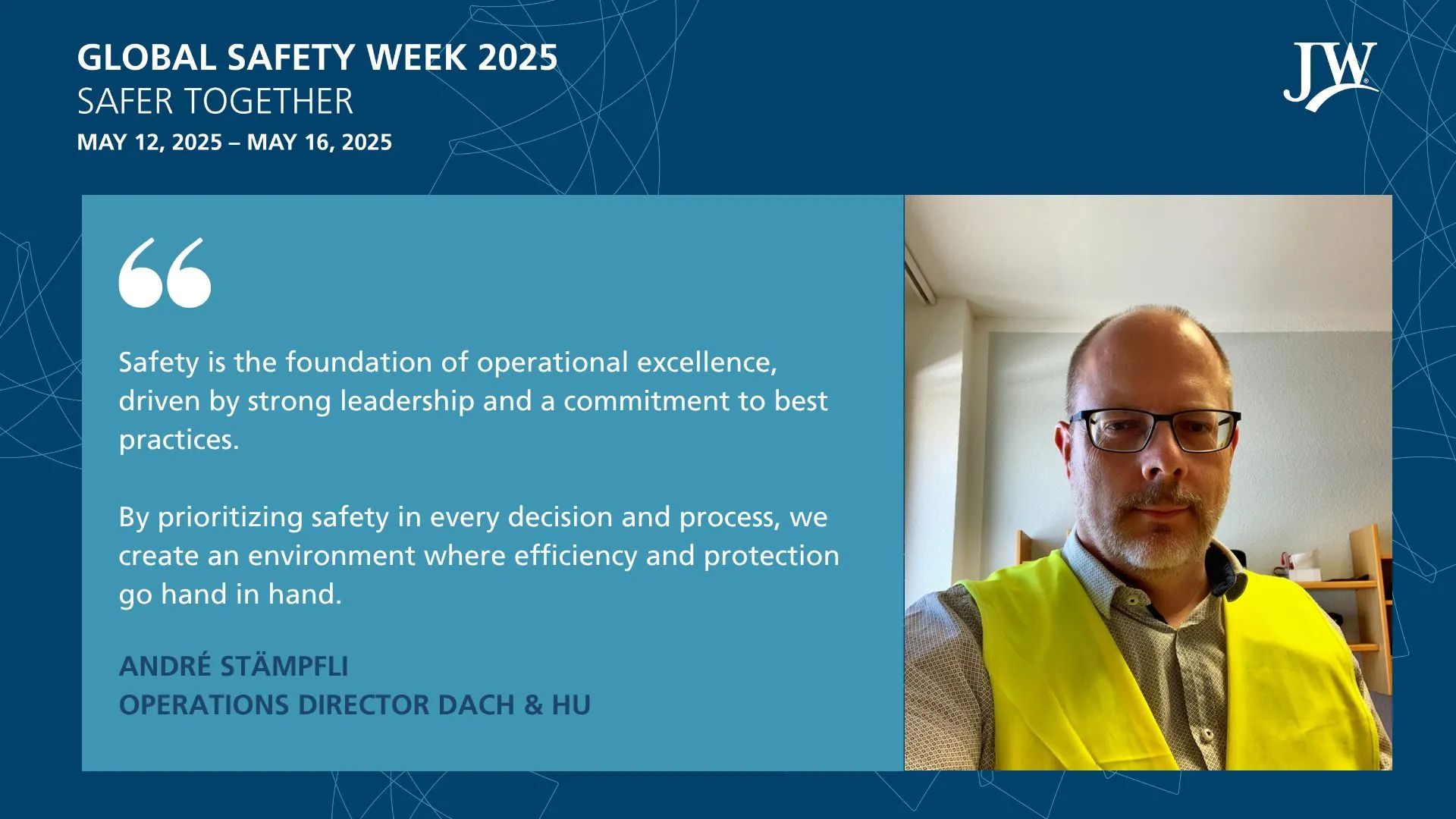
Safety Week 2025 Statement

Board responsibility: A culture of safety is not created through programs or campaigns, but through consistent decisions made at the highest level. The Board of Directors establishes the framework within which safety is non-negotiable.

Protect against silent risk drift

Health and Safety Management in Swiss Industrial SMEs: How Boards of Directors Can Protect Themselves Against Unnoticed Risks.

Evergreen Q4 2025

Board responsibility: Risks that develop gradually are not merely an operational detail, but a governance issue. The board of directors must define the risk tolerance early on, before events force decisions and the scope for action is lost.

Investment decisions are safety decisions

Health and Safety Management in Swiss Industrial SMEs: Why gradually emerging risks are not addressed in day-to-day operations and why the board of directors must make decisions at an earlier stage.

Evergreen Q1 2026

Board responsibility: Risks that emerge gradually must be addressed as a governance issue at an early stage; decisions should not be forced by the occurrence of an event. The board of directors defines in advance which risks are deliberately tolerated — and where clear limits apply.

Awards for operational work

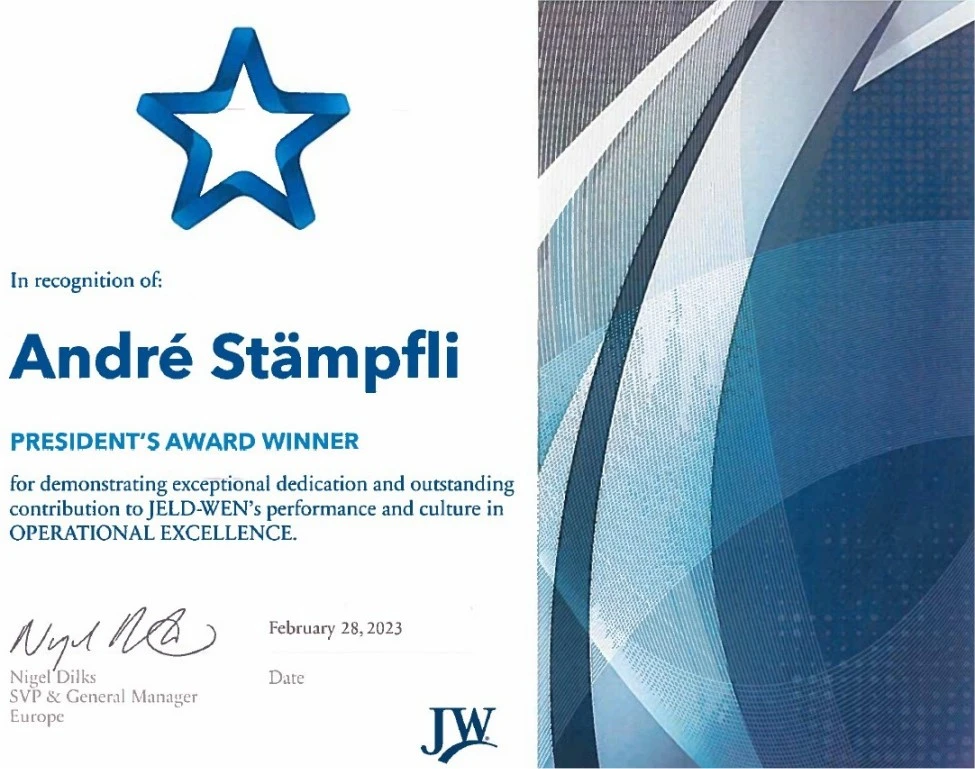
JELD-WEN President's Award 2023

JELD-WEN President's Award

Recognition for demonstrating exceptional dedication and outstanding contribution to JELD-WEN’s performance and culture in the area of operational excellence. Awarded for a eight-month interim assignment as plant manager for the two Austrian production facilities.

  • Increase in the OTIF (On-Time-In-Full) delivery rate from below 90% to 99%
  • Reduction in delivery backlogs from 11 weeks to zero
  • 30% increase in production output

Confidential Message


Your message will be read personally. I will usually respond within 1–3 business days.

Privacy Notice: Your information will be used solely to process your inquiry. It is transmitted via an external form service; the respective privacy policy applies. Your information will not be shared with third parties for marketing purposes.

Confidential contact